Grazing for Conservation: Comparing Sheep, Cattle, and Ponies on Heathlands
A heathland left entirely alone does not stay heathland for long. Birch and pine seed into it, bracken creeps in from the edges, and the heather grows tall and woody until the centres of the bushes collapse and stop seeding. Much of what people value on these sites, from nightjars and sand lizards to silver-studded blue butterflies, depends on disturbance. Cutting and burning can supply it. So can animals, and animals usually do the job more cheaply across rough, broken ground. The interesting question is which animal.
What grazing actually does
Heather passes through stages: pioneer, building, mature, degenerate. Wildlife needs several of them close together, because a lizard wants bare sand to bask on, a butterfly needs short heather next to longer stems, and a woodlark wants a bit of scrubby edge. Grazing keeps that patchwork turning over instead of locking into one stage.
It does three other things well. It creates bare ground, which is scarce and valuable: germination sites for heather seed, nesting space for ground bees and wasps, and warm patches for reptiles. It cycles nutrients through dung, feeding insects that in turn feed birds and bats. And it knocks back scrub, bracken and rank grass litter that would otherwise smother the heath.
Timing matters as much as numbers. Grazing through the growing season bites hardest into the plants; winter grazing takes less off but poaches wet ground. And more grazing is not automatically better. Push too hard and heather gives way to wavy hair-grass and bracken. The aim is variety, not a tidy carpet.
Sheep: the close croppers
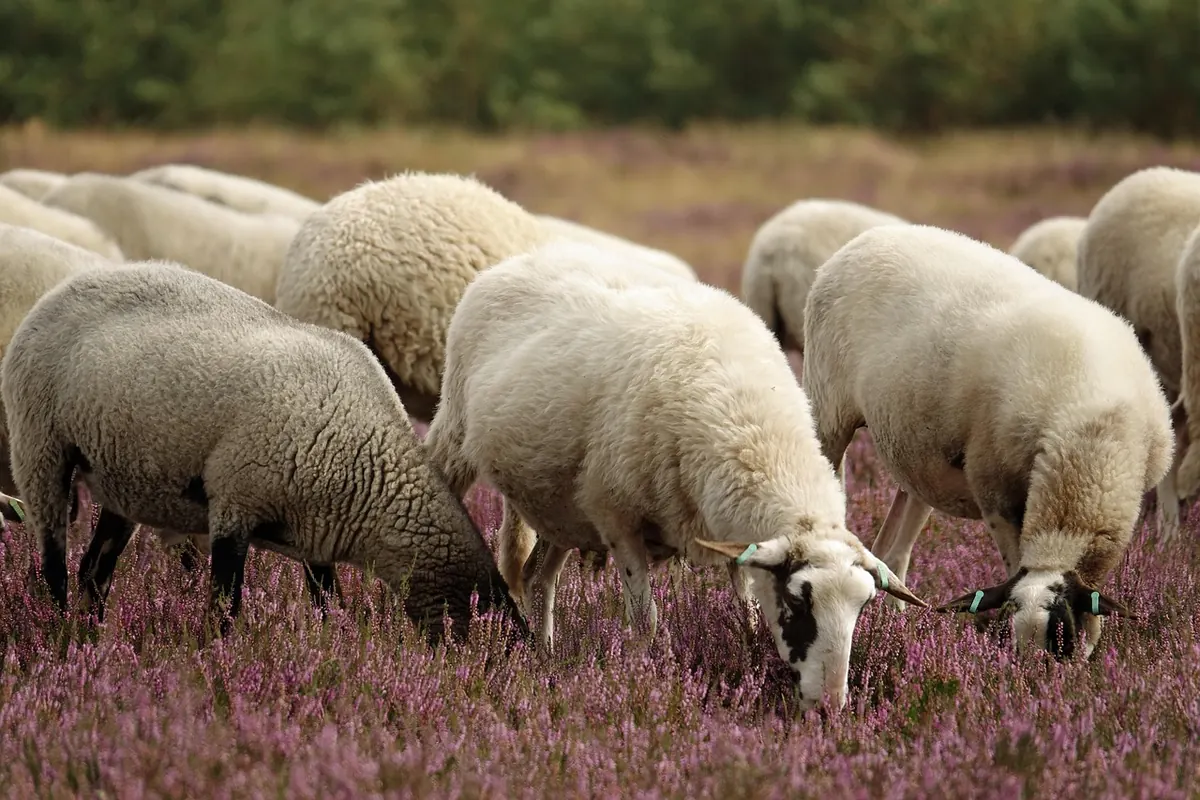
Sheep nibble with their teeth and graze tight. Put the right animals on the right heath and you get a short, fine turf with plenty of small-scale variation, which suits plants like sheep's sorrel and the invertebrates that follow them. Hardy breeds such as Hebridean, Soay and Shetland will also browse heather, gorse and bramble, and the primitive breeds shed their fleece naturally, so shearing comes off your to-do list.
The catch is selectivity. Sheep eat the sweet grasses first and leave coarse tussocks and mature heather standing, so at low numbers they can look almost idle while the structure quietly changes. At high numbers they flatten everything into a uniform sward with no bare ground and nowhere for a young heather plant to establish. They are also more work than they look: flystrike in warm, damp spells, foot problems on wet ground, ticks, and daily checks. You need decent fencing or a working dog, plus handling pens and the patience to gather them.
Cattle: the heavy, messy builders
Cattle graze with their tongues. They wrap one around a tuft of purple moor-grass and pull, which breaks up tussocks sheep would walk past. Add trampling, dung and the occasional poached patch and you get the coarse, uneven, structurally rich heath that so much wildlife depends on. On bracken-heavy sites, repeated trampling over years weakens the stand in a way mowing struggles to match.
Hardy, thrifty breeds do best: Belted Galloway, Highland, Shetland, Welsh Black. They handle wet, rough ground and poor forage, and they can stay out for much of the year.
But they are heavy, and that is the trade-off. On wet heath and valley mires, winter poaching can destroy the moss layer and start erosion that takes years to heal. Cattle need water every day, proper handling facilities, mineral licks, and training to electric fencing before they go out. They also need a herd to feel settled and a veterinary health plan agreed in advance.
Ponies: the mosaic makers
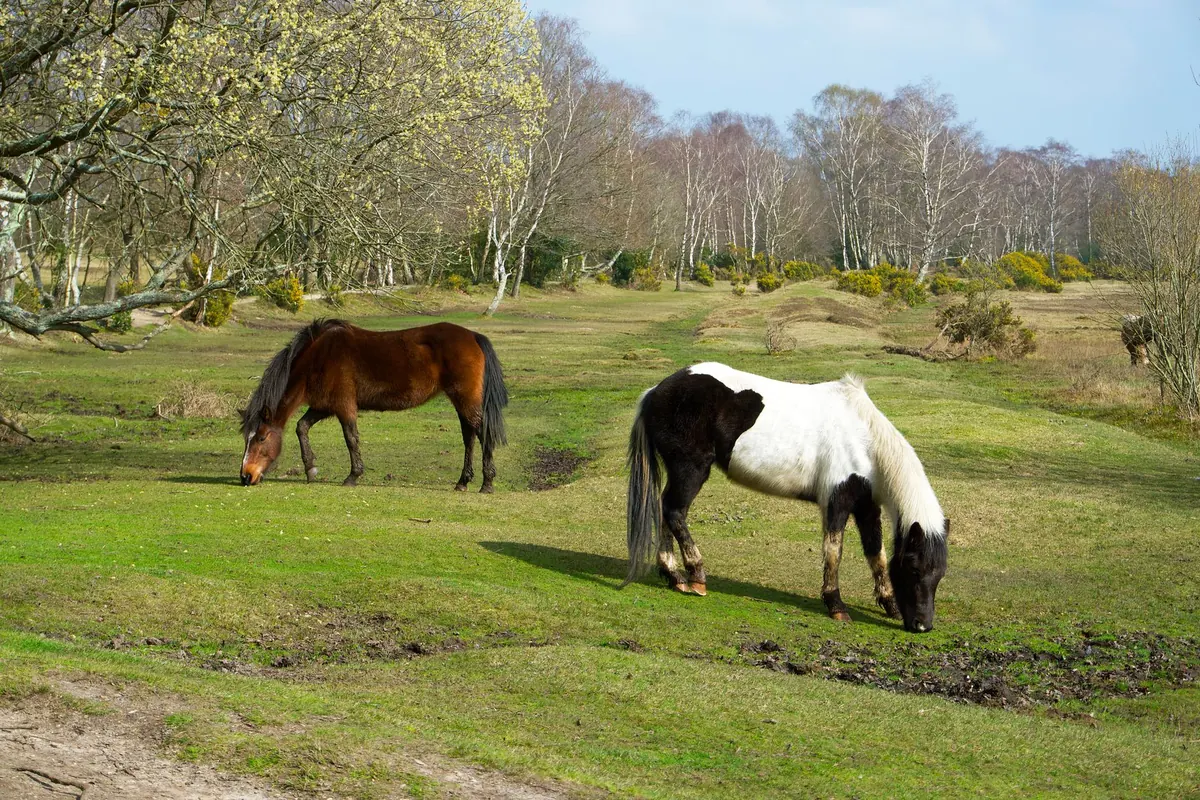
Ponies are often the best all-rounders on heath. They graze closely in some patches and ignore others, which produces the classic "lawn and rough" pattern: flower-rich short turf, taller heather, bramble and gorse left in awkward corners. They browse woody scrub, strip bark and push through dense stands in a way sheep simply do not.
Exmoor, Dartmoor, Konik and New Forest ponies live out year-round on low input. No shearing, little or no supplementary feed, and feet that usually look after themselves on abrasive ground. They are also social animals that must be kept in a group, which shapes how you plan paddocks and gathering.
The hard part with ponies is rarely the grazing. It is the surplus stock. Foals accumulate, homes are hard to find, and every scheme needs an answer for old or unwanted animals from day one. Add laminitis risk on richer ground, sweet itch in some areas, and the fact that too many ponies will graze heather into the ground, and you can see why numbers are usually kept very low and reviewed every year.
Choosing between them
- Choose sheep if you want a short, fine sward, if the site is small or awkward to fence, or if you already have a shepherd nearby.
- Choose cattle if the problem is rank grass, tussocks or bracken, and the ground is dry enough to take hooves for most of the year.
- Choose ponies if you have year-round work, thorn and gorse to suppress, and a clear plan for what happens to the animals.
- Consider a mix or a rotation if the site is large. Cattle in late summer and ponies through the winter, or sheep in short bursts to top up the turf, beats one species doing everything badly.
The practical side: fences, water and someone on call
Whatever you pick, the animal is the easy bit. The scheme around it decides whether it works.
- Boundaries. Sheep need stock netting; cattle and ponies generally respect two strands of electric fencing. Check gates, gaps and rights of way, and remember that the public will meet your animals whether or not you planned for it.
- Water. Cattle drink daily. On remote blocks that means a bowser, a gravity trough or a mains supply, not a hope that the mire will do.
- Handling. Pens, a race, and a way to load an animal that goes lame or gets out. If you cannot catch it, you cannot treat it.
- Welfare and paperwork. Agree a health plan with a vet, keep records, and check what identification, registration and movement rules apply where you are. That is a job for your vet and your local authority, not a forum thread.
- Who is responsible. Many conservation sites do not own livestock. They contract a local grazier or join a county grazing scheme. Put in writing who checks the animals, who pays for fencing, and what happens after a storm or a broken gate.
Matching the animal to the site
Work from the ground up rather than from your favourite breed. Dry, sandy heath with thin soils is easily damaged; keep stock numbers low, keep them off in wet spells, and lean towards ponies or sheep. Wet heath and valley mire can take light cattle grazing in late summer, but heavy animals in winter will wreck the moss layer. Gorse and thorn thickets need ponies or cattle first; sheep will ignore them. A small, urban-fringed reserve is usually a sheep site, simply because containment is easier and there is less public worry about large animals.
Start smaller than you think you need. Walk the site twice a year and note what is getting shorter, what is getting woodier, and where new bare ground has appeared. Then adjust numbers or the season, not the whole plan. If you are new to livestock, talk to your local Wildlife Trust or conservation grazing officer before you buy anything: most areas have experienced graziers who will lend animals, advice and a spare set of hurdles.
Photo: Mike Bird / Pexels