How to Create a Mini Heathland Patch in Your Garden
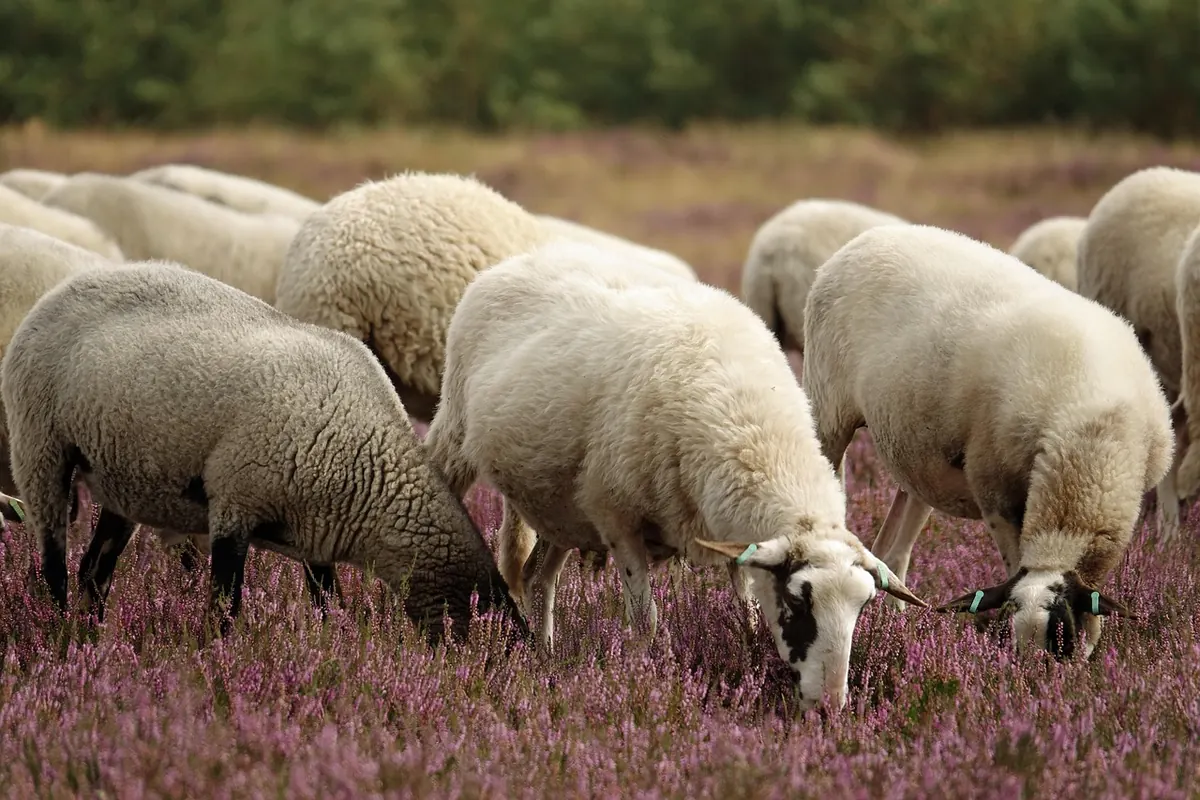
A heathland is not a lawn that has given up. It is a low, sunlit tapestry of heather, fine grasses and bare sand, held open by grazing and cutting rather than by rich soil. You do not need a moor to grow a slice of it. A sunny patch two metres square will carry ling, bell heather, a few tussocks of wavy hair-grass and the bees, lizards and beetles that come with them. The trick is copying the conditions that make heathland what it is: acid ground, almost no nutrients, and a management routine that keeps the plants young.
What makes a heathland a heathland
Heathland grows on sandy or peaty ground that is acidic and genuinely poor. That poverty is the engine. Ling, bell heather and the rest are adapted to scarcity: they tolerate dry summers, thin soils and little fertility. Give them rich soil and they respond badly — soft growth, short lives, and a bed quickly swamped by nettles, coarse grass and bramble. The second ingredient is openness. Heather is a sun plant. Let birch, pine or sycamore seedlings get established and within a few years you have scrub instead of heath.
So the goal is simple to state and slightly fiddly to achieve: acid, lean, free-draining and open, with some bare ground kept deliberately clear. Get that right and the planting list becomes easy.
Pick a sunny, free-draining corner
Aim for at least six hours of direct sun, ideally on a south- or west-facing side of the garden. A gentle slope is better than a hollow, because heathers dislike winter waterlogging almost as much as they dislike lime. Avoid the strip under a birch or conifer, where drip and shade will keep the ground too dark and too rich.
If you garden on heavy clay or on alkaline soil, don't try to convert the ground. Work above it instead: a raised bed 30 cm deep or more, or a group of large containers, gives you full control of what the roots sit in. In a small garden, a bed of 2 m by 1.5 m is enough to read as heath rather than as a border of shrubs.
Sort the soil before you buy a single plant
A cheap pH kit takes five minutes and saves a season of disappointment. Heathers generally want something in the region of pH 4.5 to 6. Then choose your route.
- Already acid: scrape off the top 10–15 cm of fertile loam and replace it with a lean mix. Buried fertile topsoil will keep feeding weeds from below.
- Neutral or alkaline: build a raised bed with a liner, or use containers. Even a good ericaceous mix will drift upwards in pH over time if it sits directly on chalk or limy clay.
- The mix: roughly two parts peat-free ericaceous compost or sandy subsoil to one part sharp sand and one part horticultural grit. You are building a lean, sharp, quick-draining medium, not a fertile one.
- Never add: manure, garden compost, blood, fish and bone, or general-purpose fertiliser. Your heathers will not thank you for it.
- Mulch thinly with bracken litter, pine needles or a little leaf mould. These mimic heath litter. They will not convert alkaline soil, so don't rely on them for that.
If your tap water is hard, use rainwater for the first season where you can. Repeated limy watering slowly pushes pH the wrong way.
Plants that earn their place
Build the bed in layers: dwarf shrubs for structure and nectar, fine grasses for texture, low herbs for variety, and bare ground for wildlife.
- Ling (Calluna vulgaris) — the backbone of lowland heath. Flowers from midsummer into autumn. Plant two or three different forms so you get white, pink and purple, and a longer flowering season.
- Bell heather (Erica cinerea) — vivid purple bells in early to midsummer. Wants the sharpest drainage in the bed, so put it on the highest, sandiest spot.
- Cross-leaved heath (Erica tetralix) — grey foliage and soft pink flowers. Give it the dampest corner; it is the one heath that likes its feet cool.
- Dwarf gorse (Ulex minor), or common gorse if you have real space — structure, spring scent and a nesting site. Keep it cut hard; it spreads.
- Fine grasses: wavy hair-grass (Deschampsia flexuosa) and purple moor-grass (Molinia caerulea). Two or three tussocks, no more, or they will outcompete small plants.
- Low herbs: heath bedstraw, tormentil, sheep's sorrel, and bilberry along a shadier edge.
- Mosses and lichens: let them colonise the open sand on their own. They are part of the look.
Buy from a specialist nursery or grow from seed. Never lift plants, plugs or cuttings from wild heathland: it damages fragile sites and is illegal in many countries, including the UK.
Planting and the first summer
Plant in autumn or early spring, when the soil is workable and roots can settle before heat arrives. Space small heathers 30–45 cm apart so they can knit together in two or three seasons. Set each plant at the same depth it grew in its pot, firm it gently, and water it in.
Through the first summer, water during dry spells — once a week, deeply, rather than a daily sprinkle. After that, established ling and bell heather cope well with drought. Weed by hand, because hoeing will slice through surface roots. Above all, resist the urge to feed anything.
Cut on a rotation: the job that keeps it alive
Heather that is never cut goes leggy and woody, and old ling will not reshoot from bare stems. Rotational cutting is what gives a heath its mix of young, flower-rich growth and taller, sheltering stems.
- Divide the patch into three strips, roughly equal.
- In late winter, from February to early March, cut one strip back. Leave the other two that year.
- Cut ling and bell heather to about 10–15 cm above ground. Never cut into thick, old wood below the green growth.
- Rake off the cuttings. Left in place, they slowly enrich the soil you worked to keep poor.
- Check for nests first. Disturbing active birds' nests is illegal in the UK and in many other countries, and cutting later in spring risks it.
- Hand-pull birch, pine, bramble and gorse seedlings as you see them. They will keep arriving from neighbouring gardens and hedges.
- Refresh a bare sandy scrape every couple of years, and keep one patch of open, warm ground facing the sun.
What turns up
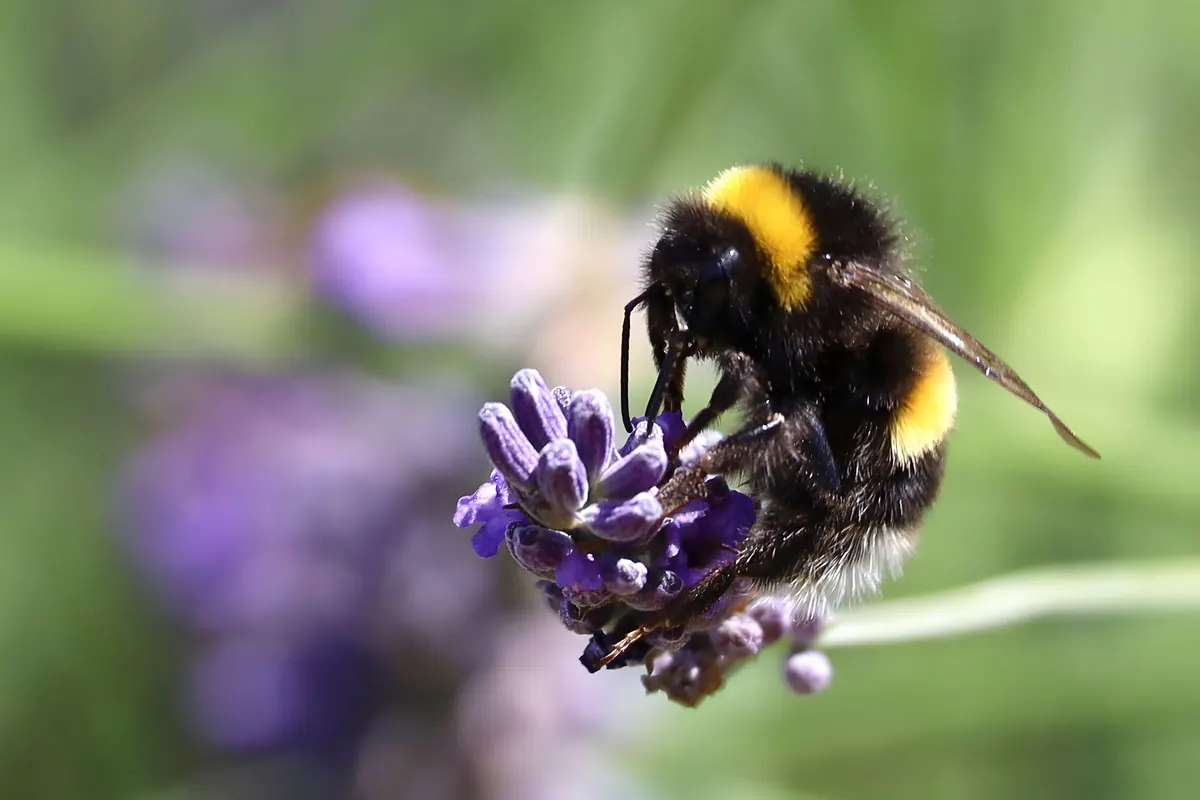
Heather is a serious nectar source, and a small bed will pull in honeybees, bumblebees, hoverflies and day-flying moths through the summer. The bare sand you keep open matters as much as the flowers: solitary and mining bees nest in it, and common lizards and slow-worms bask on it on warm mornings. Tussocks and litter left over winter shelter invertebrates, which in turn feed robins, dunnocks and wrens.
Be realistic about the rarities. Unless you live beside an existing heath, you are unlikely to attract a silver-studded blue butterfly or a Dartford warbler. What you can do is provide a genuine stepping stone: a patch of the right plants and the right structure in a landscape where such places are scarce.
Expect the first two years to look quiet
Year one will seem sparse. Small heathers sit like green pincushions with visible gaps between them, and you will be tempted to fill the space with something else. Don't. Year two the plants knit together and the first real flush of flower appears. By year three, a July evening should give you that low purple haze, humming quietly.
Keep to the rotation, keep the fertility down, keep pulling the tree seedlings, and the patch will hold its character for years. It asks for perhaps two hours of work in late winter and a few minutes of weeding through the summer. That is a small price for a corner of your garden that works like a piece of open heath.
Photo: ABeijeman / Pixabay